
Knife Crime in Hertfordshire – Insights, Trends and How to Talk to Young People
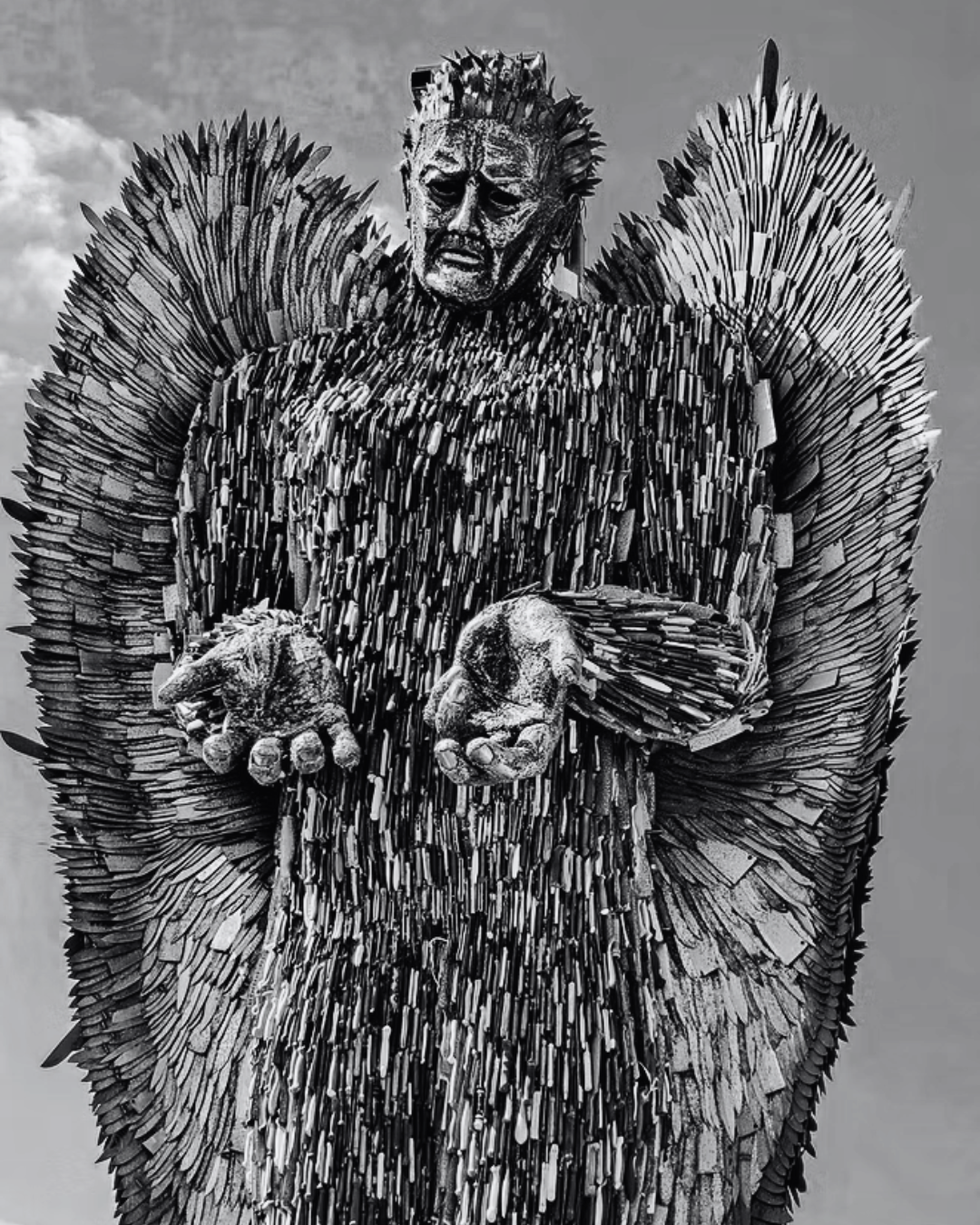
GRIT recently attended an anti-violence talk at the Bancroft Centre in Hitchin, given by campaigner Alison Copeland. Copeland has been a driving force raising awareness around teenage violence after losing her son Josh to a knife assault in 2013. His perpetrator was a young person her son’s age, who could have easily been one of his friends. Copeland has made it part of her mission to support perpetrators of knife crime, believing they are also victims with lost futures ahead of them.
Her talk came at a relevant time, not only by the visit of the Knife Angel in Welwyn Garden City, but also as a recent study showed that knife crime is the commonly raised concern by young people.
Copeland highlighted some of the cultural and social dynamics driving youth exposure to violence. When you combine this with local trends, the picture is complex, but awareness, conversation and early intervention are our strongest tools.
Media exposure and desensitisation
Copeland says that 70% of 8-year-olds have watched the shooting of US activist Charlie Kirk and this reflects how normalised violence may feel to young people now. She also linked to games like Roblox or Minecraft, where private rooms “can get dark” or where violence is gamified. These are not just entertainment Copeland says, they can shape how young people understand conflict, aggression, and what is ‘normal.’
Distorted perception of crime
According to Copeland, only 3% of young people actually carry a knife – yet in a study, 100% of children thought that “everyone is carrying one.” This kind of misperception can drive fear, poor decision-making, and peer pressure. She also challenged where the focus lies: “There’s a focus on the victim, not rehabilitating the perpetrator,” adding that: “Hurt young people hurt young people.”
Understand the figures
Not all offences mean a stabbing that caused injury. Many are for possession and not use. According to government figures, over 99% of knife offences for children are for possession, not threatening or using the weapon. It feeds into the perception for people of all ages that the world is more dangerous than it really is. Having conversations and emphasising facts over fear can help this.
Prevention rather than reaction
One of Copeland’s strongest messages was prevent, don’t react. “Have the conversation first,” she says. “Don’t talk about something after it happens.” Copeland urges adults to find out what young people think, then find a solution. “If we only have the conversation after an incident, we’ve missed the chance to shape thinking or give support early.”
School, exclusion and structural pressures
Copeland warns that exclusion can move problems outside the school, rather than solve them. “You’ve got the problem off your premises and pushed it outside.” Children as young as Y4s are taking knives in because they’re scared, says Copeland. She also made a powerful call not to judge young people: “If we continue judging rather than helping … if we give up when it gets hard, how do we know what we’re capable of?”
Hertfordshire and UK knife crime
So how does this relate to the streets and places our young people inhabit? The signs look encouraging. Herts police have been running a #LivesnoTKnives campaign over the past few years and according to Hertfordshire’s Serious Violence Strategy, youth knife crime in the county has dropped by about 41% between 2021 – 2026.
However, knife crime has not disappeared. Between 2020–2024 there were 13 knife-possession offences in school premises in 2024 (down from 16 in 2023). Compared to other parts of the country, Hertfordshire remains relatively low but as the figures show, more needs to be done. This summer Hertfordshire hosted the Knife Angel in October this year, a national monument made from confiscated knives to raise awareness, during a month-long youth engagement programme.
Why Copeland’s observations resonate locally
- The cultural exposure (games, media, sexualisation) that Copeland described may be one of the “push factors” for youth: normalised aggression, fear, or risk.
- Misperceptions around how common knife-carrying is can fuel anxiety or peer conformity.
- Structural issues (exclusion from school, lack of early intervention) make prevention conversations even more critical.
- Her message to prevent rather than react dovetails with Hertfordshire’s strategic approach: education, youth engagement, and diversion.
How to talk to young people (parent/carer advice)
- Start early, don’t wait for a crisis
Open a conversation before something happens. Ask gently: “What do you think about knives / violence / gangs?”, or: “Does what’s on social media ever worry you?” Use age-appropriate language. For younger kids, you might talk about “Safety,” “making good choices,” or “what feels scary.” - Use their world – not just your worries
Reference games, shows and apps they know. “I was thinking about that scene in … / that game … What do you think about that?” Be curious, not judgmental. Try to understand why they might feel certain games are ‘fun’ or ‘exciting.’ Validate feelings: if they say things feel normal or “just a game,” acknowledge why they feel that way while gently pointing out real-world differences. - Share real risks without scaremongering
Use local data or examples: “In Hertfordshire, sometimes young people are hurt by knives. The police and schools are working hard to prevent that.” Explain the real consequences: physical harm, criminal records, mental trauma, not just police trouble. Don’t rely on, “If you do this, you’ll go to prison” — it can shut down conversation or feel distant. - Empower them
Ask: “What do you think would help young people feel safer / less pressured?” Encourage them to say no, walk away or reach out: “If you ever feel unsafe, who could you call?” Talk about alternatives: conflict resolution, trusted adults, mentors, youth groups and peer support. - Take action together
Sign up for local campaigns, or support initiatives like Knife Angel or other amnesties. Encourage local youth to be involved in prevention: peer-led groups, workshops, school talks. Help young people understand that giving up a knife, or seeking help, is a sign of strength, not weakness. - Continuous support and follow ups
Don’t just have one conversation. Revisit the topic periodically. Check in emotionally: “How do you feel now about what we talked about earlier?” Know local support services: for example, Fearless.org lets people report anonymously and seek advice. (Hertfordshire police mentioned it in their week of action.) Explore mentoring, youth work, or diversion programmes.
Reflection and call to action
- Prevention-first: Copeland’s key insight — talk early, don’t wait for an incident — should be at the heart of any community strategy.
- Cultural awareness: We need to understand how digital media, games, and online spaces shape young people’s worldview.
- Local engagement: Hertfordshire is not immune. Even though knife crime is “relatively low,” local data shows real risk and ongoing work.
- Shared responsibility: This isn’t just a policing issue — parents, schools, youth workers, community groups all have roles to play.
The numbers
3200 – knife or offensive weapon offences committed by children aged 10-17 (Youth Justice Board, 2024)
8.8 – average daily offences a day (over a year, can vary)
53,000 – total number of offences across all ages in England and Wales in 2024 (House of Commons Library)
Links:
Inside-the-mind-of-a-16-year-old_2025_report_final-Nov.pdf